The Easter Morning That Altered a Nation
On 14 April 1471, a thick fog descended upon the fields north of Barnet. Beneath that mist, two armies clashed in a battle that would determine who wore the English crown. The fog that shrouded Hadley Green that Easter Sunday would prove as consequential as any sword stroke, concealing friend from foe until confusion proved fatal for one side.
The Wars of the Roses Reaches Barnet's Doorstep
The Wars of the Roses, the series of civil wars between the House of York and the House of Lancaster that raged from 1455 to 1487, had already seen England's throne change hands twice. Edward IV of the House of York had seized power from the feeble Henry VI in 1461, only to find himself driven into exile in Burgundy ten years later when his former ally turned against him.
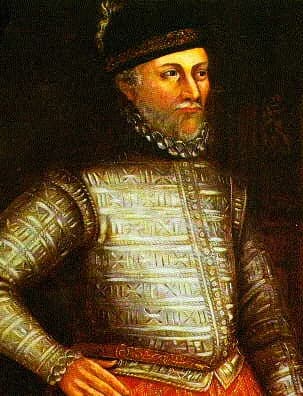
That ally was Richard Neville, 16th Earl of Warwick, known to history as "Warwick the Kingmaker." Born in 1428, Warwick had been the most powerful man in England, a noble whose wealth and influence allowed him to make and unmake kings. His falling-out with Edward IV over foreign policy and the king's secret marriage to Elizabeth Woodville led him to defect to the Lancastrian cause. In October 1470, Warwick invaded England and restored Henry VI to the throne.
Edward IV did not accept defeat. On 14 March 1471, he landed at Ravenspur on the Yorkshire coast with Burgundian support. By early April, he had reached London. Warwick, commanding the Lancastrian forces, marched from Coventry to confront him. The two armies met on the high ground north of Barnet, then in Hertfordshire, where the Great North Road ran through fields now known as Hadley Green.
The Fog of War
The battle began in the early hours of that Easter Sunday, fought across a ridge of high ground in what is now the parish of Monken Hadley. Contemporary accounts describe a "thick mist" that blanketed the battlefield, reducing visibility to a matter of yards. This fog would prove decisive.
Warwick commanded an estimated 15,000 men against Edward's 10,000 to 12,000. The Lancastrian line formed on either side of the Great North Road, with the Earl of Oxford commanding the right wing and the Duke of Exeter the left. Edward positioned his 18-year-old brother Richard, Duke of Gloucester (the future Richard III), on the Yorkist right, and Lord Hastings on the left.
The battle raged for two to three hours in brutal, confused fighting. The slight slope of the ground slowed Gloucester's advance, while Oxford's forces on the Lancastrian right successfully drove back Hastings' wing and pursued them off the field. Oxford then wheeled his men about to strike the Yorkist centre.
The Fatal Mistake
What happened next doomed the Lancastrian cause. Oxford's troops bore a badge depicting a "star with rays." In the fog, this was mistaken for Edward IV's emblem, the "sun in splendour." When Oxford's men attempted to return to the main battle line, Warwick's centre, believing them to be Yorkist reinforcements, opened fire upon them.
Chaos spread through the Lancastrian ranks as cries of "treason" rippled along the line. In the confusion, morale collapsed. Edward seized the moment and pressed his attack.
Warwick, who according to some accounts had fought on foot to demonstrate he would not flee, attempted to reach his horses as his army disintegrated. He was cut down and killed on the field. His brother John Neville, Marquess of Montagu, also perished. The battle had cost the Lancastrians an estimated 1,000 to 10,000 dead, against Yorkist losses of perhaps 500 to 1,000.
The Aftermath and the Decisive Crown
Warwick's death removed the one man in England whose power and popularity might have sustained the Lancastrian cause. No other noble commanded his wealth, his network of retainers, or his reputation. The Battle of Barnet secured Edward IV's throne for the remainder of his life, a reign of unbroken Yorkist rule that would last until 1483.
The victory was part of a crushing sequence. Just three weeks later, on 4 May, Edward defeated the remaining Lancastrian forces at Tewkesbury, where Henry VI's son Edward of Westminster was killed. Henry VI himself died in the Tower of London on 21 May, probably on Edward's orders. The direct Lancastrian line was extinguished.
Yet the Wars of the Roses were not quite over. The elimination of Warwick and the Lancastrian heirs cleared a path that would eventually lead to Henry Tudor, a distant Lancastrian claimant, seizing the throne as Henry VII in 1485 and founding the Tudor dynasty. In this sense, Barnet was a step toward a new royal house no less than a preservation of the old.
Barnet's Living Memorial
Barnet has never forgotten the battle fought upon its soil. The most visible memorial stands on the Great North Road, now the A1: the Barnet Obelisk, erected in 1740 by Jeremy Sambroke to mark the traditional site of Warwick's death. This stone pillar, which Historic England recognises as a significant monument, has stood for nearly three centuries as a reminder of the town's place in national history.
Barnet Museum, founded in 1938 at 31 Wood Street, houses permanent displays on the battle, including a miniature model of the battlefield that helps visitors visualise the troop dispositions on that foggy morning. The museum's collection includes battle banners, archaeological finds from the battlefield area, and research materials for those tracing local or family connections to the conflict.
The battlefield site itself, at Hadley Green in Monken Hadley, is now a Local Nature Reserve and Site of Metropolitan Importance. The area once called "Gladmore Heath," where the fiercest fighting occurred, is peaceful pasture today. A location known as "Dead Man's Bottom" marks where pursuing Yorkist forces cut down fleeing Lancastrians. St Mary the Virgin Church in Monken Hadley, rebuilt in 1494, stands in the parish where most of the battle took place.
The Barnet Medieval Festival, held annually, celebrates this heritage with re-enactments, demonstrations, and educational events. The museum also offers self-guided walks that take visitors across the battlefield landscape, explaining how the terrain influenced the battle's outcome.
What the Records Confirm
The date of the battle, 14 April 1471, is well-documented in contemporary chronicles. The location north of Barnet is established through multiple sources. The casualties remain uncertain; medieval estimates vary widely, and modern historians caution against accepting precise figures.
The friendly fire incident involving Oxford's badge is recorded in contemporary accounts, though the exact details of how the confusion spread cannot be verified with certainty. Warwick's death on the field is confirmed, as is the subsequent display of his body at St Paul's Cathedral before burial at Bisham Abbey in Berkshire.
What remains unclear is the precise location of Warwick's death; the obelisk marks a traditional rather than archaeologically verified site. The exact number of casualties on both sides cannot be determined from surviving records.
A Battle That Echoes Still
Five and a half centuries after that foggy Easter Sunday, the Battle of Barnet remains woven into the fabric of the town. The street names, the museum collections, the annual festival, and the obelisk standing watch over the Great North Road all testify to a community that understands its history is also England's history.
For the residents of Barnet, the battle is not merely an entry in history books. It happened here, on the high ground north of the town, where local farmers and villagers would have seen armies marching and heard the clash of arms. The fields of Hadley Green hold the memory of a morning when the fog lifted to reveal a new political order, forged in confusion and violence, that would shape the English monarchy for generations to come.